Design Ops, a contraction of the words "design" and "operational method", enables you to design your products more effectively and helps you to industrialise your processes. At JEMS, it's a favourite of the Design team.
The aim of Design Ops is to propose solutions to challenges related to the management of Design teams by taking a holistic approach to tools and methodologies. The direct stakes of such an approach consist of improving interdisciplinary communication and collaboration, whilst automating the value creation chain for services/products.
Design Ops can take the form of the creation of disruptive design processes, the exploitation of new software or the development of an organisation's deployment strategy. Let's take a look at how it can benefit the industrialisation of your design processes, and how you can drive this change!
Why industrialise your design processes?
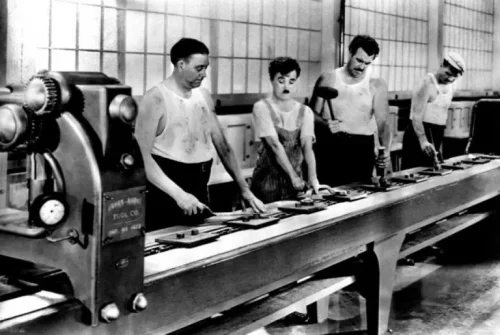
In the collective imagination, industrialisation and automation are synonymous with job losses and are therefore viewed unfavourably. I Robot, Welcome to Gattaca, Ex Machina, .... There are countless science fiction films that reveal this fear, born in the era of Chaplin and the Modern Times. Although it's a reality, automation doesn't just destroy: it transforms our jobs and creates new ones.
The transformation of digital professions is inevitable and can be frightening. Design Ops can be your best ally if you don't want to be a victim of change, but rather a player in it.
How does Design Ops meet the need for automation?
The creation and management of Systems Design is the major solution that Design Ops has brought about to favour industrialisation in design. Indeed, Design Systems bring together in the same tool all the design components and information necessary for the development of digital products. Furthermore, they are accessible to both design and development teams.
In this way, they strengthen the connection and collaboration between these two teams, while guaranteeing a minimum level of quality for the products delivered.
“The Design System carries the burden of the mundane,
so that designers can detach themselves from it.”
Josh Clark | Founder, Big Medium
Thanks to the automation made possible by the use of Design Systems, designers can invest the time they save in what matters most: the study of user needs and the creation of appropriate user paths.
Accepting change: a prerequisite for integrating Design Ops.
Systems Design is changing the UI Designer's job by shifting their role from creating interfaces to designing tools that enable them to generate digital products quickly and efficiently. This transformation is exacerbated by the emergence of NoCode in software and CMS.
UX specialists can rest assured that the industrialisation of creative processes and artificial intelligence will never supplant the UX profession. On the contrary, they reinforce their role and their importance. However, they will have to adapt to integrate solutions such as Design Systems into their processes.
The transformation of professions directly involves modifying creation and collaboration processes. To evaluate this, there is unfortunately no magic formula, but your operational design approach can be inspired by the many shared experiences. For example, the RATP reveals the new creation processes they have generated to support the integration of new tools such as Figma.
How do we implement Design Ops at JEMS?
We have addressed this need for transformation through the Design Thinking by conducting the study in project mode. Initially, we interviewed staff in each department to identify the issues and needs related to the following initial question: How to improve collaboration at JEMS by changing its way of being, thinking, or doing ?
Subsequently, and after assessing our value creation processes, we studied market trends through benchmarking. In parallel, we also analysed the results of reliable studies to compare bests practices with those of JEMS. At the end of this stage, we were able to identify a set of tools and methods to experiment with in project mode.
Today, we are refining the operational design at JEMS through experimentation. The objective is to establish a virtuous circle in which every employee is involved, and in which every project compels us to improve our ways of being, thinking, or doing.