Ergonomics and interfaces are at the centre of our lives. Mobile applications, software, and business interfaces, ergonomics is everywhere. But what is it? What is its purpose in the context of my work? In this article you will find a Checklist of simple ergonomic laws that are easy to understand and implement for all professions that are still hesitant to use ergonomics as a genuine strategic tool.
«If you think a beautiful design is expensive, you should evaluate the cost of a bad design.»
Ralf Speth, CEO of Jaguar
Definition: Ergonomics is the scientific discipline that improves users' work. The term comes from Greek – Ergo {work} and Nomos {laws}.
Ergonomics and Human Sciences
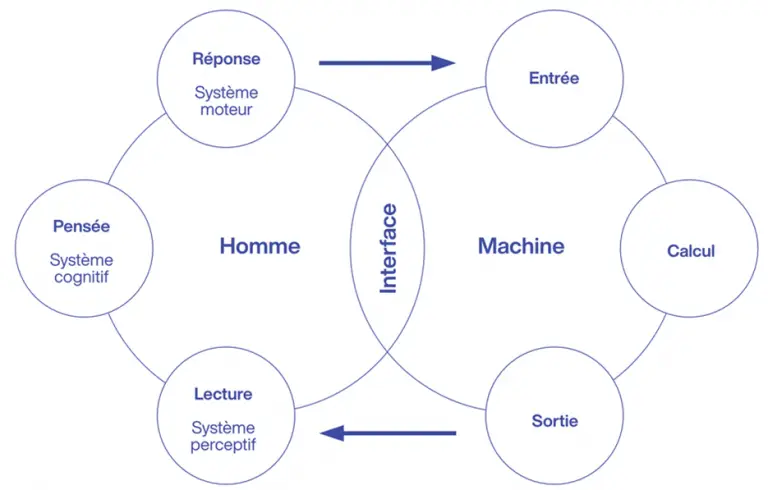
Numerous studies have examined ergonomics and its impact on human-machine interaction.
We constantly have to make choices. Our work tools communicate information to us, our colleagues share data with us... Ergonomics is present in every exchange and interaction with our tools. Science allows us to better understand this link. It studies interactions with a device, a product or a service that requires the use of man's major mental functions. It also studies potential problems of mental load or cognitive load that result from this interaction.
To make it easier for the brain to decide more quickly which action it should take.
Pourquoi des lois ergonomiques ?
The laws will allow for over 70 years of experience in interface design to be taken into account, to use the correct visual codes, and to align with consumer habits. The ergonomic laws will ensure interfaces that help the brain to quickly decide which action(s) it needs to perform.
The benefits for users
Following ergonomic laws ensures:
- Best adoption Improving your users' engagement and adoption
- Best transformation Optimising the user journey in a purchase funnel
- Best experience To propose a rich and memorable experience
How to integrate ergonomic laws into your work?
Ergonomic laws can be integrated into the needs of any type of structure, all sectors of activity, and all professions. For example:
Commercial
- Produce a clear business activity report
- Design an effective data visualisation service
Financial backer
- Produce a summary financial report with a view of trends
- Design an understandable financial dashboard
Communication
- Ensure the correct structuring of the materials
- Maintain consistency across all your materials
- Engage your managers with innovative reporting
Example in image
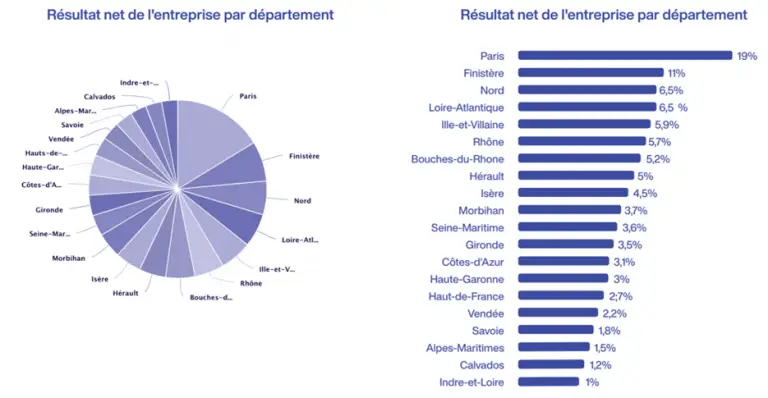
We present a very common client case study, where the challenge is to communicate a report with a clear message. In our case, we want to communicate the ‘Net results of Company X by department’. On the left, the standard breakdown graphic representation with a lot of scattered information and a confused reading of that information. On the right, using ergonomic principles, the information is structured, clear, and legible.
The checklist of ergonomic laws for successful projects
There are more than ten laws on ergonomics. We have selected the simplest laws to implement. They are all complementary. This list is a genuine checklist of good ergonomic practices. Following it guarantees an efficient service.
Fitts's Law
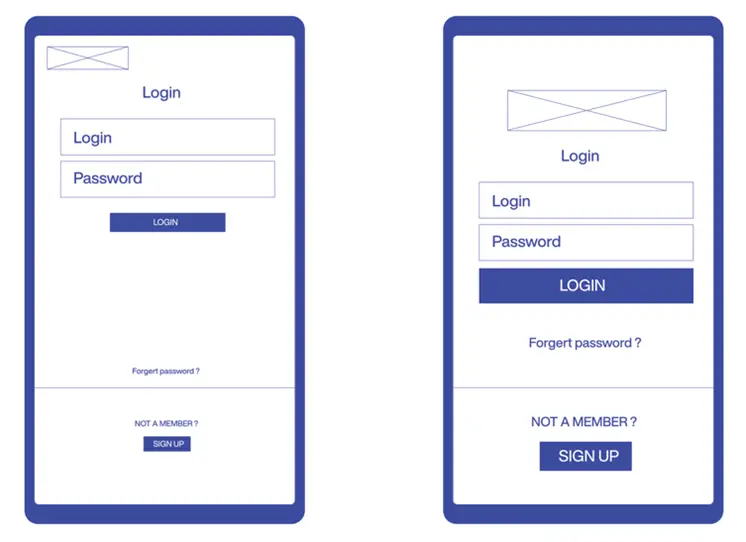
It involves highlighting the objects you wish to use to encourage the user to perform a given action. These objects should be close in distance and large in size.
Hick's Law
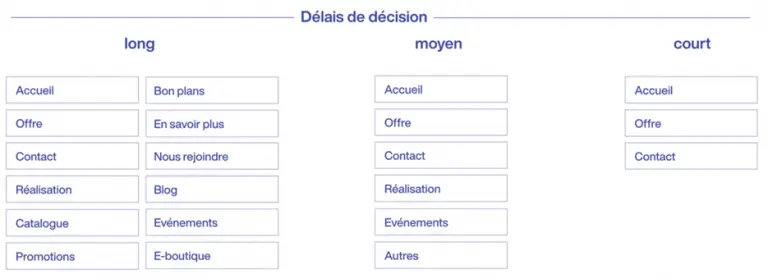
She is interested in the time taken by your users to interpret information. This time can increase depending on the number and complexity of the information. The more choices the user has, the longer it will take them to decide!
Jakob's Law
This law recommends drawing inspiration from an existing design model, in order to avoid confusing the user. It is therefore advisable to design an interface that reuses current conventions. For example, the very similar search engine between booking.com and airbnb.fr.
The Miller Act
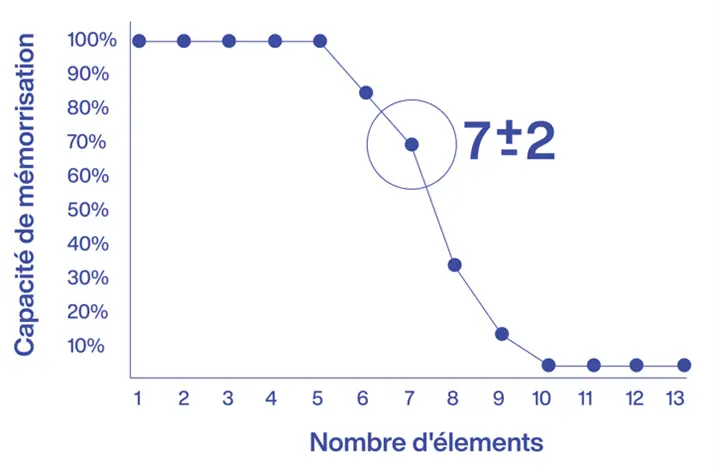
A person can memorise an average of 7 (plus or minus 2) items. This is a consequence of the limited capacity of our short-term memory.
The Law of Prägnanz
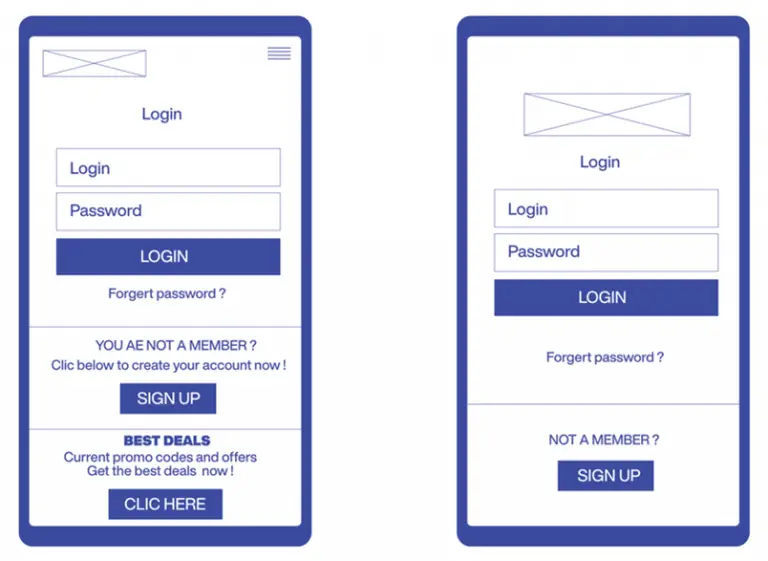
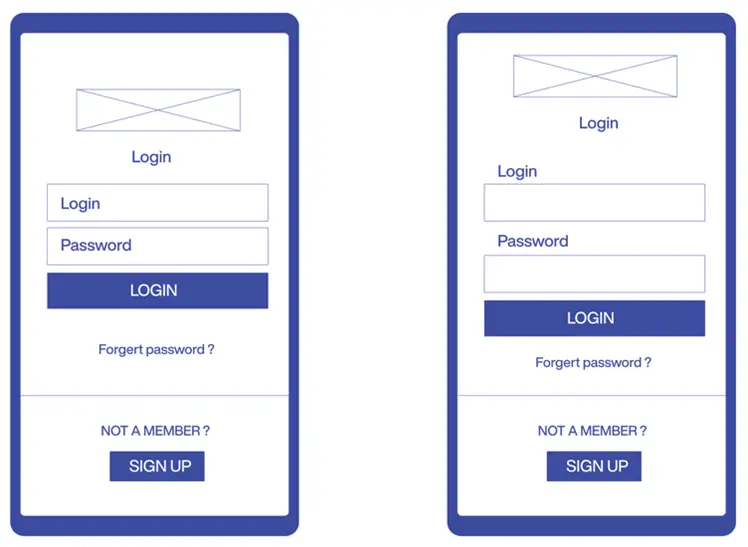
The brain processes simple figures more easily than complex figures. Therefore, the simpler a shape or image is, the more easily and quickly it will be assimilated and memorised by the brain. It is important to remove all superfluous information, which creates a cognitive load and hinders navigation.
The Serial Position Effect
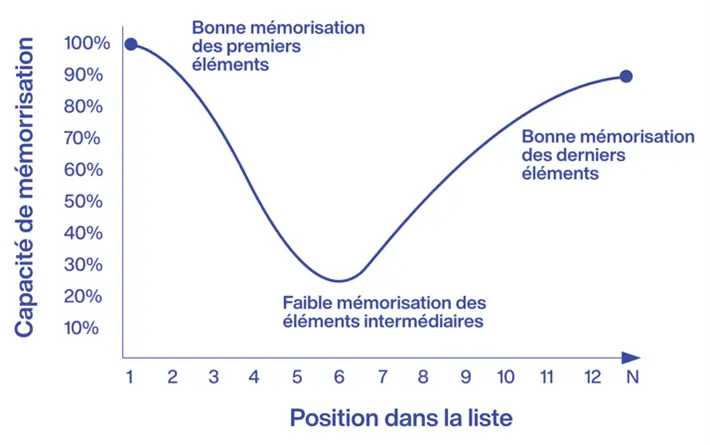
This law specifies that a person remembers the first and last objects they perceive. Indeed, the brain records the first objects presented to it into its long-term memory. As for the last elements it detects, it categorises them in its short-term memory.
Tesler's Law
It concerns the management of design complexity of an interface. It states that for any system, there is a level below which its complexity cannot be reduced. From this point onwards, the complexity will merely be shifted.
The Von Restorff effect
This law specifies that an object which stands out from the rest of its group is more likely to be noticed. In particular, a warm colour can be applied to a link to attract attention, or a Call to Action button can be made larger.
The Zeigarnik Effect
She states that humans remember incomplete tasks better than completed ones. Therefore, mechanisms should be put in place to remind users of incomplete operations that they need to finalise. Your brain quickly forgets all completed actions in order to focus on those still in progress.
To conclude
Our checklist is a selection of simple ergonomic principles that can be implemented across all types of services and for all types of users. This selection will save you time when producing reports or other materials for your management or colleagues. These are quick wins that will add value to your work.
Who are we?
JEMS is a data industry leader. Our business is to create, manage, and leverage our clients' data assets. We transform your data into genuine use cases.