

Home » Expertises » DevOps
DevOps
Industrialise delivery cycles to make data products, platforms, and AI services more reliable, faster, and scalable
DevOps is often reduced to a set of deployment or automation tools. In reality, it is a broader approach, aiming to bring development, operations, and quality teams closer together, as well as the wider stakeholders who contribute to the lifecycle of a piece of software. Its objective is to streamline the application lifecycle, reduce friction between teams, and make deliveries more continuous, safer, and better suited to user expectations.
The subject has become strategic: applications must evolve quickly, remain available, integrate frequent feedback, and support increasingly complex environments. In this context, DevOps allows for better alignment of execution speed, quality of service, and adaptability, provided it is conceived as a transformation of practices, rather than a simple choice of tools.
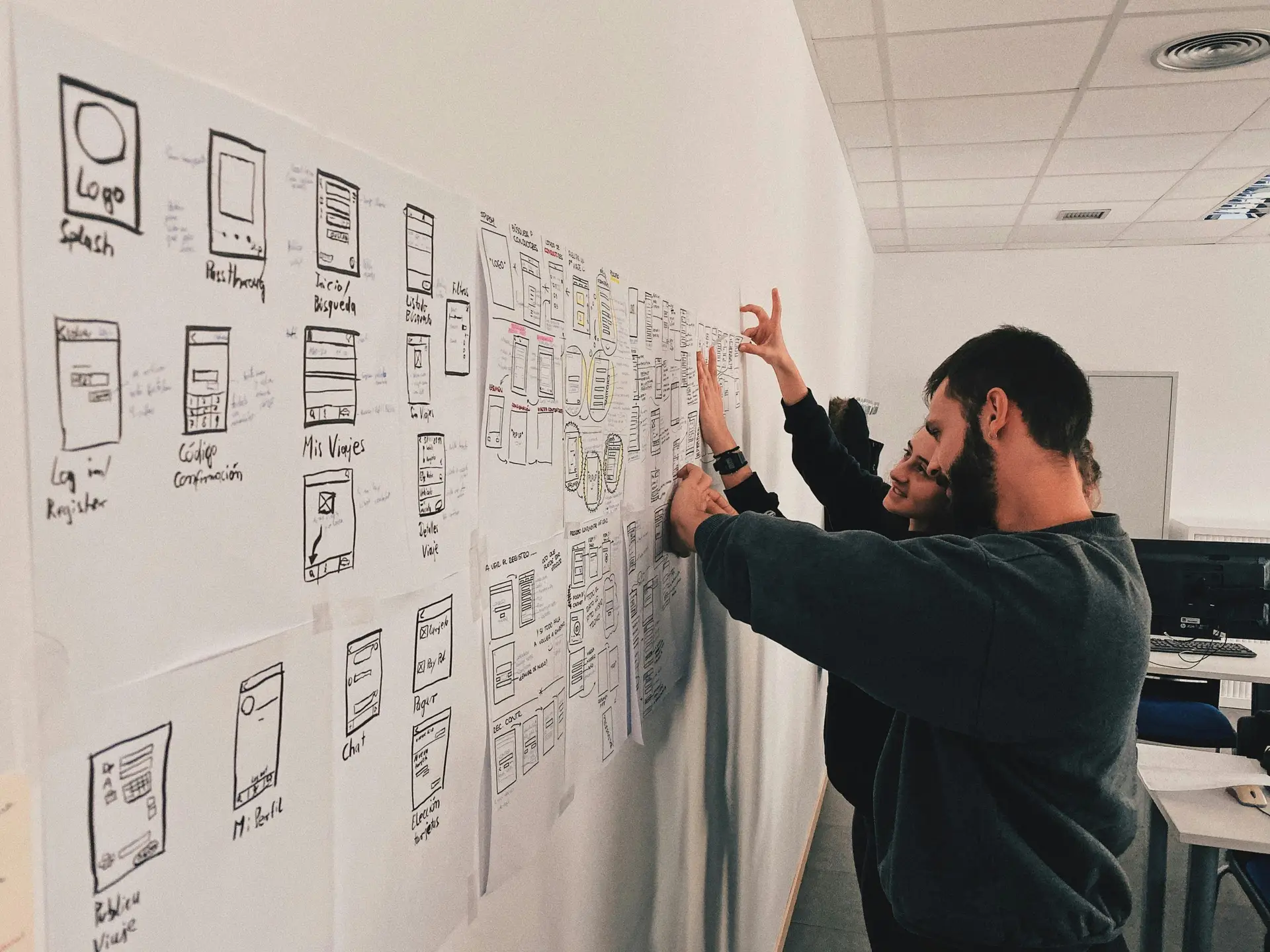
DevOps has become strategic because organisations can no longer pit speed of delivery against the stability of environments. Business departments expect more frequent updates, faster fixes, and applications that continuously adapt to user behaviour. Without a structured framework, these expectations often result in long cycles, risky deployments, a lack of visibility into the actual quality of deliveries, and persistent tensions between development and operations teams. DevOps aims to foster collaboration between business, development, operations, and quality to enable continuous deployment and faster adaptation to market feedback.
In many organisations, software industrialisation has been built up in successive layers: one tool for building, another for deployment, another for testing, another for monitoring. This accumulation can improve certain aspects, but it is not enough on its own to create a genuine DevOps dynamic. If responsibilities remain siloed, if feedback loops are too slow, or if teams do not have shared objectives, the promise of acceleration remains incomplete. Our article on CI/CD He also insists that the objective is not just to automate, but to improve the entire application lifecycle through consistent practices.
Purely technological approaches therefore quickly show their limits. Installing CI/CD pipelines or monitoring tools does not automatically transform the way of collaborating, testing, deploying and operating. A robust DevOps approach requires acting simultaneously on culture, ways of working, the relevant level of automation, software quality and the ability to learn quickly from incidents and real-world usage. This is why we assert that DevOps is not an isolated offering, but a mindset disseminated within its other offerings, such as data platforms or web development.
Following this logic, DevOps becomes a much broader performance lever. It's not just about getting code into production faster. It helps reduce repetitive human interventions, improve quality, better orchestrate scalability and industrialisation issues, and strengthen the continuity between development, quality, operations, and business needs. JEMS's job vacancies on this subject also reflect this very operational vision, with a strong emphasis on automation, quality, CI/CD, and scalability.
How does this expertise translate at JEMS?
At JEMS, DevOps is approached as a structuring mindset, dedicated to the sustainable transformation of development, quality, and operational practices.
With this approach, we're not just installing CI/CD pipelines. The challenge is to build a smoother, more reliable, and more sustainable way to design, test, deliver, and operate applications.
Culture
We support organisations in evolving their ways of collaborating to bring teams closer together, share objectives, and accelerate feedback loops. This cultural dimension is central to JEMS's positioning, presenting DevOps as a state of mind before a catalogue of tools.
Automation
We are implementing continuous integration and deployment practices, along with context-appropriate testing, monitoring, and automation mechanisms, to reduce manual interventions and improve the reliability of deliveries.
Industrialisation
We structure robust and scalable delivery chains, capable of supporting application growth, service quality, and the multiplication of teams or products. DevOps missions such as orchestrating scalability, automation, and industrialisation challenges are at the heart of our expertise.
Alignment
We link DevOps practices to business challenges so that delivery speed, quality and technical priorities remain consistent with business uses and expectations. This logic is aligned with our vision of DevOps, focused on rapid adaptation to market feedback and the elimination of unnecessary processes.
Business Value
A well-structured DevOps approach improves both delivery speed, application stability and the quality of collaboration between teams. It allows for the transformation of software development into a more continuous, better-managed process that is closer to the real expectations of the business. At JEMS, this value is directly linked to the improvement of the application lifecycle, automation and the ability to adapt quickly to feedback.
This dynamic becomes particularly important when organisations need to evolve multiple applications, multiple teams or multiple environments in parallel. DevOps then serves not only to go faster, but to do so more reliably, more consistently and more scalably.
Functional changes are being rolled out to production more quickly.
Deployments are becoming more reliable and repeatable.
Incidents related to uploads are decreasing.
Teams collaborate more effectively around common goals.
Environments are becoming more readable, more stable and better supervised.
Scaling across multiple teams or products is made easier.
VISION & PERSPECTIVE
In the medium term, DevOps will continue to expand beyond just CI/CD pipelines to become an enterprise-wide foundation for standardisation. The most mature organisations will seek to pool their best practices, accelerate team onboarding, standardise their environments, and better integrate quality, security, monitoring, and operations into the development lifecycle.
This evolution will also directly impact data and AI environments. The more distributed, automated, and critical systems become, the more DevOps practices, and by extension their variations around data and machine learning, become necessary to guarantee reliability, repeatability, and scalability. In our opinion, the challenge is therefore not to make DevOps an additional silo, but a transverse industrialisation framework that permeates all digital offerings and products.

TO GO FURTHER...


FAQ
What is DevOps in a business context?
DevOps is an approach that aims to improve collaboration between business, development, operations and quality to deliver applications more quickly and reliably.
Why adopt a DevOps culture?
Because it allows for reduced delivery times, improved application quality, and better integration of user or market feedback into development cycles.
Is DevOps solely technical?
No. JEMS explicitly presents it as a mindset and a repository of good practices, not as a mere collection of tools.
Le lien entre DevOps et l’industrialisation logicielle réside dans leur objectif commun d’améliorer l’efficacité, la fiabilité et la rapidité du cycle de vie du développement logiciel. Ils partagent plusieurs concepts clés :
* **Automatisation :** L’industrialisation logicielle, dans son sens large, vise à automatiser les processus répétitifs. DevOps s’appuie fortement sur l’automatisation pour construire, tester, déployer et gérer les applications. Des outils d’intégration continue/déploiement continu (CI/CD) sont au cœur de cette automatisation.
* **Processus standardisés :** L’industrialisation favorise des processus standardisés et reproductibles. DevOps encourage la définition de flux de travail clairs et constants pour le développement et les opérations, ce qui réduit les erreurs et améliore la prévisibilité.
* **Évolutivité :** L’industrialisation permet de produire à grande échelle. DevOps, en améliorant l’efficacité et en réduisant les délais, permet aux organisations de livrer des logiciels plus rapidement et plus fréquemment, ce qui est une forme d’évolutivité dans la livraison logicielle.
* **Qualité et fiabilité :** L’industrialisation vise la qualité constante des produits finis. Dans le contexte logiciel, DevOps intègre des pratiques de tests automatisés et de surveillance continue pour garantir la qualité et la stabilité des applications tout au long du cycle de vie.
* **Collaboration :** Bien que l’industrialisation traditionnelle mette l’accent sur l’efficacité des machines, DevOps met l’accent sur la collaboration entre les équipes de développement et d’opérations pour briser les silos et améliorer la communication. Cette collaboration est essentielle pour répliquer les succès et résoudre rapidement les problèmes, un peu comme on le ferait dans un processus industriel bien rodé.
En résumé, DevOps peut être considéré comme **une extension et une adaptation moderne des principes de l’industrialisation logicielle** à l’ère du développement logiciel agile et de l’infrastructure agile. Il applique des méthodes inspirées de l’industrialisation pour transformer la manière dont les logiciels sont créés, livrés et exploités, en se concentrant sur l’automatisation, la standardisation, la qualité et la collaboration.
DevOps allows for the industrialisation of software development by automating builds, tests, deployments, and monitoring, while standardising certain delivery practices.
When should an organisation embark on DevOps?
When it seeks to accelerate its development cycles, reduce production risks, and better align its applications with business needs.
Why entrust this subject to JEMS?
Because JEMS combines DevOps culture, CI/CD automation, quality, monitoring, and industrialisation in a cross-functional approach that integrates with the company's other offerings.
DevOps is a key driver for transforming how organisations design, deliver, and operate their applications. When conceived as a culture of collaboration, automation, and continuous improvement, it enables gains in reliability, speed, and consistency at scale. At JEMS, this approach is part of a transverse logic of sustainable industrialisation, serving digital products, data platforms, and business expectations.
Industrialise your deliveries without losing reliability
Discuss with a JEMS expert to structure a DevOps approach tailored to your challenges of speed, quality, industrialisation, and scaling.